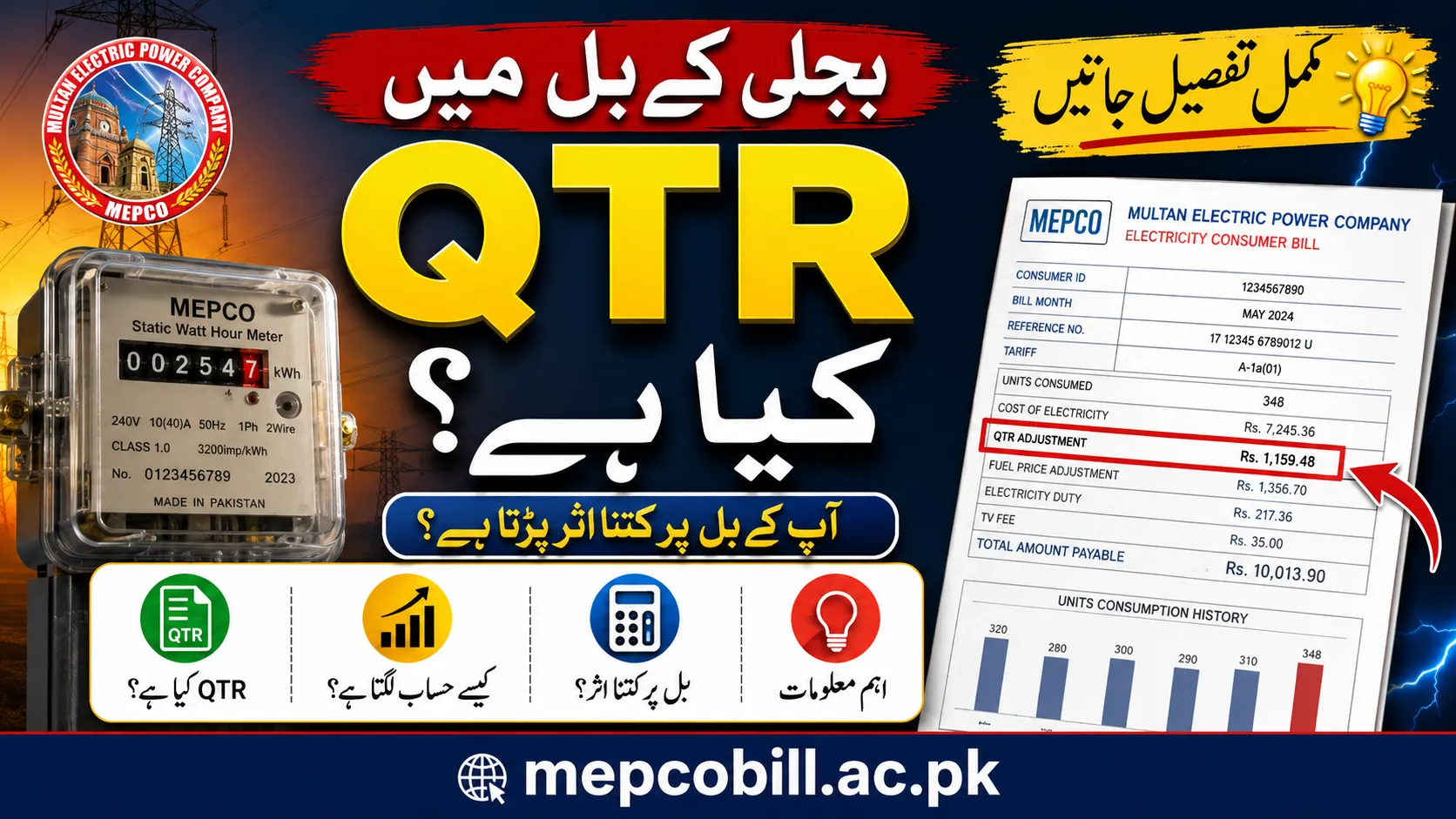
MEPCO Quarterly Tariff Adjustment (QTR) Guide – What is QTR in Electricity Bill?
Learn everything about MEPCO Quarterly Tariff Adjustment (QTR), including what QTR means, why it appears on electricity bills, how it differs from Fuel Price Adjustment (FPA), and how it affects your monthly electricity bill.
Complete Guide to Understanding Quarterly Tariff Adjustment on Your Electricity Bill
If you’ve recently reviewed your MEPCO electricity bill, you may have noticed a billing component called Quarterly Tariff Adjustment (QTR). For many consumers, this is one of the most confusing entries on the bill because it appears separately from energy charges and may vary over time.
Common questions include:
- What is Quarterly Tariff Adjustment (QTR)?
- Why does QTR appear on my electricity bill?
- Why is the QTR amount different from previous bills?
- Is QTR the same as Fuel Price Adjustment (FPA)?
- How does QTR affect my total electricity bill?
- Can I calculate QTR myself?
- Is QTR a permanent charge?
This guide answers these questions in clear, easy-to-understand language. Instead of focusing on complex regulatory terminology, we’ll explain the purpose of Quarterly Tariff Adjustment, how it fits into the electricity billing process, and how it differs from other billing components.
Whether you’re checking your MEPCO Online Bill, reviewing a Duplicate Bill, or trying to understand why your monthly bill has changed, this guide will help you better understand one of the most important adjustments on your electricity bill.
What Is Quarterly Tariff Adjustment (QTR)?
Quarterly Tariff Adjustment (QTR) is a billing adjustment that may be applied to electricity bills under the applicable regulatory framework.
Unlike regular energy charges, which relate primarily to electricity consumption, Quarterly Tariff Adjustment reflects tariff-related revisions approved through the regulatory process.
Rather than permanently changing the tariff every month, these adjustments may be reflected separately on electricity bills when applicable.
In simple terms:
Quarterly Tariff Adjustment (QTR) is a billing adjustment that reflects approved tariff-related changes for a specific billing period.
Because tariff reviews take place periodically, the amount shown as QTR may vary depending on the applicable billing period and regulatory decisions.
Why Does Quarterly Tariff Adjustment Exist?
Electricity distribution involves generation, transmission, distribution, maintenance, and system operations. The costs associated with these activities can change over time.
Instead of making continuous permanent tariff revisions, the regulatory framework may provide for periodic tariff adjustments that are reflected on electricity bills when applicable.
Quarterly Tariff Adjustment exists to accommodate these approved changes while maintaining transparency in electricity billing.
This approach helps consumers see tariff-related adjustments as a separate billing component rather than combining them with energy charges.
Why Is QTR Displayed Separately on the Electricity Bill?
Many consumers wonder why Quarterly Tariff Adjustment appears as a separate line instead of being included within the unit price.
Displaying QTR separately improves transparency.
It allows consumers to distinguish between different types of charges, including:
- Energy Charges
- Fixed Charges
- Fuel Price Adjustment (FPA)
- Quarterly Tariff Adjustment (QTR)
- Taxes and Government Levies
- Other Billing Adjustments
Separating these components makes it easier to understand how the total payable amount has been determined.
How Is Quarterly Tariff Adjustment (QTR) Determined?
After understanding what Quarterly Tariff Adjustment is, many consumers want to know how the amount shown on their electricity bill is determined.
Unlike regular energy charges, which are based primarily on electricity consumption and the applicable tariff, Quarterly Tariff Adjustment (QTR) is determined under the applicable regulatory framework. It reflects tariff-related adjustments that may be approved following periodic reviews of electricity sector costs and other relevant factors.
Consumers are not expected to calculate QTR manually. Instead, the approved adjustment is applied according to the billing rules for the relevant billing period and is displayed as a separate item on the electricity bill where applicable.
The key point to remember is that QTR is a variable billing adjustment rather than a fixed monthly charge.
Factors That Can Influence Quarterly Tariff Adjustment
The amount shown as Quarterly Tariff Adjustment may vary because several factors affecting the electricity sector can change over time.
Some of the major influences include:
1. Periodic Tariff Reviews
Electricity tariffs are reviewed periodically under the applicable regulatory framework.
These reviews help ensure that approved tariffs continue to reflect the broader costs associated with supplying electricity.
2. Changes in Operational Costs
Electricity distribution involves many operational activities, including:
- Transmission
- Distribution
- Network maintenance
- System upgrades
- Infrastructure development
Changes in these and other approved cost components may contribute to tariff adjustments.
3. Regulatory Decisions
Quarterly Tariff Adjustment is applied only in accordance with the relevant regulatory approvals and billing framework.
When tariff-related adjustments are approved, they may be reflected on electricity bills during the applicable billing period.
4. Billing Period
Every electricity bill relates to a specific billing cycle.
If a Quarterly Tariff Adjustment applies during that period, it may appear as a separate billing component on your bill.
5. Applicable Consumer Category
Different categories of electricity consumers are billed under different tariff structures.
As a result, the way tariff adjustments are reflected may differ depending on the applicable billing framework.
Quarterly Tariff Adjustment vs. Fuel Price Adjustment (FPA)
Many consumers assume that QTR and Fuel Price Adjustment (FPA) are the same because both appear as separate items on the electricity bill.
Although they may look similar, they serve different purposes.
| Quarterly Tariff Adjustment (QTR) | Fuel Price Adjustment (FPA) |
|---|---|
| Reflects approved tariff-related adjustments | Reflects changes in electricity generation fuel costs |
| Based on periodic tariff reviews | Based on changes in fuel-related generation costs |
| May be applied according to the applicable quarterly adjustment process | May vary according to fuel cost changes and applicable billing periods |
| Separate billing component | Separate billing component |
Understanding this distinction makes it easier to interpret why multiple adjustments may appear on the same electricity bill.
Quarterly Tariff Adjustment vs. Energy Charges
Another common misunderstanding is the difference between Energy Charges and Quarterly Tariff Adjustment.
| Energy Charges | Quarterly Tariff Adjustment (QTR) |
|---|---|
| Based on electricity consumption and the applicable tariff | Reflects approved tariff-related adjustments |
| One of the main billing components | Additional adjustment when applicable |
| Calculated as part of the regular electricity bill | Displayed separately for greater transparency |
| Directly related to units consumed | Related to tariff adjustment decisions under the applicable framework |
Both are important parts of the electricity bill, but they represent different concepts.
Can Every Consumer Receive Quarterly Tariff Adjustment?
Electricity consumers are classified into different tariff categories, each with its own billing framework.
Examples include:
- Residential Consumers
- Commercial Consumers
- Industrial Consumers
- Agricultural Consumers
Whether and how Quarterly Tariff Adjustment appears on a bill depends on the applicable tariff category, billing period, and regulatory provisions.
Consumers should always refer to their official electricity bill to see which billing components apply to their connection.
How QTR Affects Different Consumer Categories
Residential Consumers
Residential consumers use electricity mainly for household purposes.
Their bills may include tariff-related adjustments where applicable under the relevant billing framework.
Commercial Consumers
Commercial electricity connections are commonly used by:
- Retail shops
- Offices
- Restaurants
- Hotels
- Shopping centres
Commercial consumers may have different tariff structures, and their bills reflect the billing components applicable to their category.
Industrial Consumers
Industrial consumers generally consume larger amounts of electricity for manufacturing and production activities.
Their billing follows the tariff structure approved for industrial connections.
Agricultural Consumers
Agricultural electricity is often used for:
- Tube wells
- Irrigation systems
- Farming operations
These consumers are billed according to the tariff framework applicable to agricultural connections.
Can You Calculate QTR Yourself?
Many users search online for a Quarterly Tariff Adjustment Calculator.
In practice, QTR is applied according to approved regulatory decisions and the applicable billing framework.
Because it is not a simple mathematical formula based only on electricity units consumed, consumers generally rely on the amount shown on their official electricity bill.
Instead of trying to calculate the adjustment manually, it is more useful to understand:
- Why QTR appears
- Why it changes
- How it differs from other billing components
- How it contributes to the total payable amount
Common Misconceptions About Quarterly Tariff Adjustment
Several myths about QTR often create confusion among electricity consumers.
Let’s address some of the most common ones.
Myth 1: QTR Is the Same as FPA
False.
Although both are separate billing adjustments, Quarterly Tariff Adjustment and Fuel Price Adjustment represent different concepts and are applied for different reasons.
Myth 2: QTR Is a Permanent Tax
False.
Quarterly Tariff Adjustment is not a government tax. It is a tariff-related adjustment that may be applied according to the applicable regulatory framework.
Myth 3: QTR Never Changes
False.
Like other billing adjustments, Quarterly Tariff Adjustment may vary depending on the applicable billing period and approved regulatory decisions.
Myth 4: Everyone Pays the Same QTR
Not necessarily.
The appearance and application of Quarterly Tariff Adjustment depend on factors such as:
- Consumer category
- Applicable tariff
- Billing period
- Regulatory framework
For this reason, two consumers may not always see identical adjustments on their bills.
Myth 5: Higher Electricity Usage Automatically Means Higher QTR
Electricity usage primarily affects Energy Charges.
Quarterly Tariff Adjustment is a separate billing component determined under the applicable framework and should not be confused with the cost of electricity units consumed.
Illustrative Example
Consider two households that consume a similar amount of electricity.
Household A carefully reviews every section of its electricity bill.
Household B looks only at the total payable amount.
When both receive their monthly bills, Household A can identify changes in:
- Energy Charges
- Quarterly Tariff Adjustment
- Fuel Price Adjustment
- Taxes
- Other Adjustments
Household B simply notices that the bill has increased or decreased without understanding why.
This example shows why learning about individual billing components helps consumers better understand their electricity bills.
How to Review Quarterly Tariff Adjustment (QTR) on Your Electricity Bill
When you receive your monthly MEPCO electricity bill, it is important to review each billing component carefully instead of focusing only on the total payable amount.
The Quarterly Tariff Adjustment (QTR), when applicable, is shown as a separate entry to improve transparency and help consumers understand how different billing components contribute to the final bill.
When reviewing your bill, pay attention to the following sections:
- Customer Name
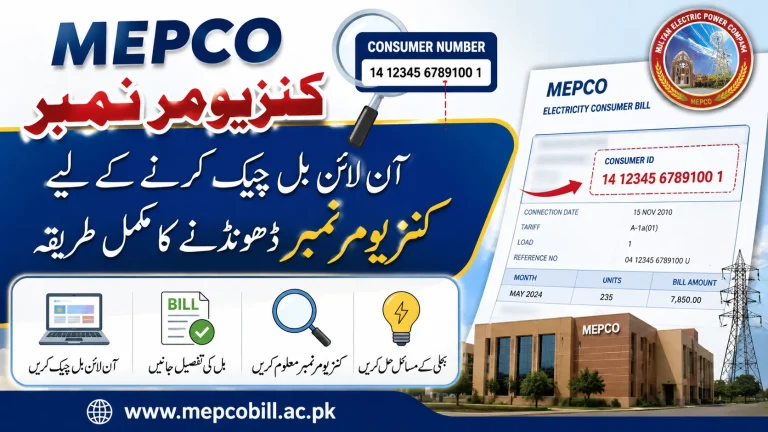
- Consumer Number
- Reference Number
- Billing Month
- Previous Meter Reading
- Current Meter Reading
- Units Consumed
- Tariff Category
- Energy Charges
- Fuel Price Adjustment (FPA), if applicable
- Quarterly Tariff Adjustment (QTR), if applicable
- Taxes and Government Levies
- Other Adjustments
- Due Date
- Total Payable Amount
Reviewing these details together gives you a better understanding of your electricity bill and helps you identify changes from one billing period to another.
Tips for Understanding Quarterly Tariff Adjustment
Although consumers cannot change the Quarterly Tariff Adjustment applied to their bill, understanding its purpose can make electricity billing much easier to interpret.
Compare Bills from Different Billing Periods
Instead of looking at only one bill, compare your current bill with previous ones.
Doing so helps you identify:
- Changes in electricity consumption
- Differences in energy charges
- Variations in QTR
- Changes in Fuel Price Adjustment (FPA)
- Seasonal billing patterns
Maintaining a record of previous bills is a simple way to monitor long-term trends.
Understand Every Billing Component
Quarterly Tariff Adjustment is just one part of your electricity bill.
To gain a complete understanding of your monthly charges, also review:
- Energy Charges
- Fixed Charges
- Fuel Price Adjustment (FPA)
- Taxes and Duties
- Other Billing Adjustments
Looking at the bill as a whole provides more context than focusing on a single charge.
Use the MEPCO Bill Calculator for Estimates
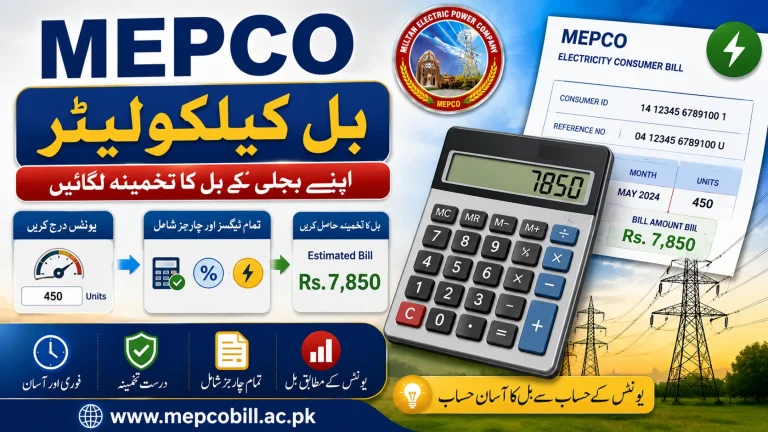
If you want to estimate your monthly electricity costs before your bill arrives, our MEPCO Bill Calculator can help.
While the calculator estimates charges based on expected electricity usage, your official MEPCO bill remains the authoritative source for all applicable billing components, including any approved adjustments.
Learn About Related Billing Concepts
Understanding QTR becomes easier when you also understand:
- Electricity Tariffs
- Peak Hours
- Fuel Price Adjustment (FPA)
- Electricity Charges
- Consumer Categories
These concepts are interconnected and together provide a complete picture of how electricity bills are structured.
Frequently Asked Questions (FAQs)
1. What is Quarterly Tariff Adjustment (QTR)?
Quarterly Tariff Adjustment (QTR) is a billing adjustment that reflects approved tariff-related revisions under the applicable regulatory framework.
2. Why does QTR appear on my electricity bill?
QTR may appear to reflect tariff adjustments approved for the relevant billing period. It is displayed separately to improve transparency.
3. Is QTR the same as Fuel Price Adjustment (FPA)?
No.
Although both may appear as separate billing components, QTR relates to tariff adjustments, while FPA reflects changes in electricity generation fuel costs.
4. Is Quarterly Tariff Adjustment a tax?
No.
Quarterly Tariff Adjustment is not a government tax. It is a tariff-related billing adjustment applied under the applicable regulatory framework.
5. Why is the QTR amount different on different bills?
The amount may vary depending on the applicable billing period, regulatory decisions, tariff framework, and other approved factors.
6. Can I remove QTR from my electricity bill?
No.
If Quarterly Tariff Adjustment applies to your billing period under the relevant framework, it will appear on your official electricity bill.
7. Is QTR charged every month?
Its appearance depends on the applicable billing period and regulatory decisions. It is not necessarily included on every bill.
8. Does every consumer receive the same QTR?
Not always.
The way QTR is reflected on a bill depends on factors such as the consumer category, tariff framework, and billing period.
9. Can I calculate QTR myself?
Consumers generally rely on the amount shown on their official electricity bill because QTR is determined according to the applicable regulatory framework.
10. Does higher electricity usage automatically increase QTR?
Electricity consumption mainly affects Energy Charges. QTR is a separate adjustment governed by the applicable billing framework.
11. Why is QTR shown separately instead of being included in the unit rate?
Displaying QTR separately helps consumers distinguish tariff adjustments from regular electricity charges and improves bill transparency.
12. What is the difference between Energy Charges and QTR?
Energy Charges relate directly to electricity consumption, while QTR reflects approved tariff-related adjustments that may apply during a specific billing period.
13. Can commercial and industrial consumers also receive QTR?
Yes.
Different consumer categories follow different tariff structures, and the official bill reflects the billing components applicable to each category.
14. Where can I understand every charge on my electricity bill?
Our MEPCO Electricity Charges Explained guide provides a detailed explanation of every major billing component.
15. What is the difference between QTR and FPA?
QTR reflects tariff-related adjustments, while FPA reflects changes in electricity generation fuel costs. Although both may appear as separate items, they serve different purposes.
16. Does weather affect QTR?
Weather can influence electricity demand, but QTR itself is determined through the applicable regulatory framework rather than weather conditions alone.
17. Why should I save previous electricity bills?
Keeping previous bills helps you compare electricity usage, monitor billing trends, locate your Consumer Number and Reference Number, and understand how different billing components change over time.
18. Can I estimate my electricity bill before it arrives?
Yes.
You can use the MEPCO Bill Calculator to estimate electricity costs based on expected consumption. However, the official bill includes all applicable adjustments and remains the final record.
19. Where can I learn more about electricity tariffs?
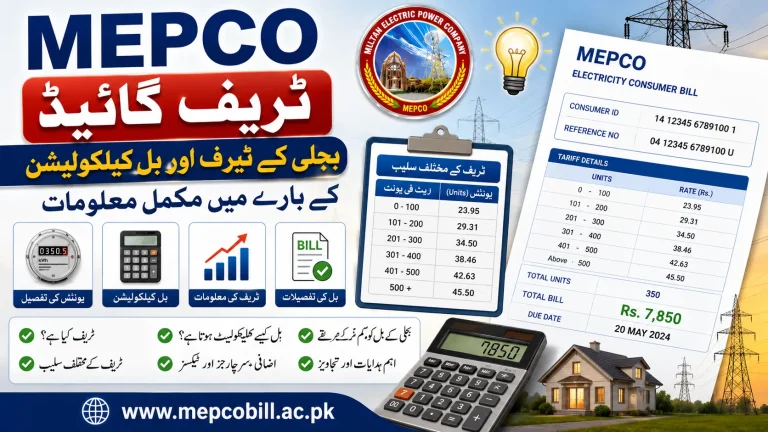
Our MEPCO Tariff Guide explains tariff categories, billing structures, and the concepts that influence electricity pricing.
20. Where can I find more information about MEPCO billing?
Visit our complete MEPCO knowledge center, which includes guides on:
- MEPCO Online Bill
- Duplicate Bill
- Consumer Number
- Reference Number
- Bill Calculator
- Tariff Guide
- Peak Hours
- Electricity Charges Explained
- Fuel Price Adjustment (FPA)
- Electricity Saving Tips
Related MEPCO Guides
To gain a complete understanding of your electricity bill, explore these related resources:
- MEPCO Duplicate Bill – Get a copy of a lost or misplaced bill.
- MEPCO Consumer Number Guide – Learn where to find and use your Consumer Number.
- MEPCO Reference Number Guide – Understand the purpose of your Reference Number.
- MEPCO Bill Calculator – Estimate your electricity bill based on expected usage.
- MEPCO Tariff Guide – Learn about tariff categories and electricity pricing.
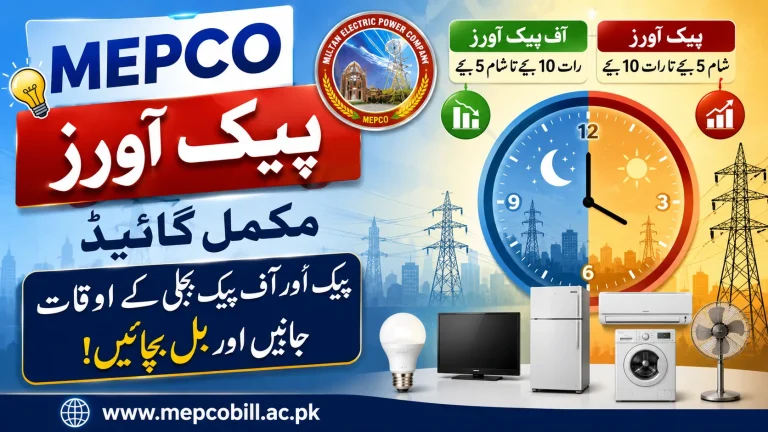
- MEPCO Peak Hours Guide – Discover how peak and off-peak usage affects electricity demand.
- MEPCO Electricity Charges Explained – Understand every component of your electricity bill.
Why Understanding Quarterly Tariff Adjustment Matters
Quarterly Tariff Adjustment is one of the most misunderstood entries on an electricity bill. Because it appears separately from regular energy charges, many consumers are unsure why it is included or how it affects the total payable amount.
This guide has explained:
- What Quarterly Tariff Adjustment is
- Why it exists
- Why it appears separately on electricity bills
- How it differs from Energy Charges
- How it differs from Fuel Price Adjustment (FPA)
- Factors that influence QTR
- Common misconceptions
- Practical tips for reviewing your bill
By understanding these concepts, you can interpret your MEPCO electricity bill more confidently and make sense of the different charges shown each billing period.
Summary
Quarterly Tariff Adjustment (QTR) is an important part of the electricity billing process, designed to reflect approved tariff-related adjustments under the applicable regulatory framework. While it may not appear on every bill or remain the same over time, understanding its purpose helps consumers better interpret their monthly electricity charges.
Instead of focusing only on the total payable amount, reviewing each billing component—including Energy Charges, Fuel Price Adjustment (FPA), Quarterly Tariff Adjustment (QTR), taxes, and other adjustments—provides a clearer understanding of how your electricity bill is structured.
Combined with our MEPCO Tariff Guide, Electricity Charges Explained, and Fuel Price Adjustment (FPA) Guide, this article is part of a comprehensive knowledge hub that simplifies electricity billing for MEPCO consumers.