MEPCO Peak Hours – Complete Guide to Peak & Off-Peak Electricity Hours
Electricity demand changes throughout the day. During some hours, homes, businesses, and industries use much more electricity than usual, while at other times the demand is lower. To manage these fluctuations efficiently, electricity systems distinguish between peak hours and off-peak hours.
If you’ve ever wondered why electricity usage is discussed differently during certain times of the day, or how peak hours relate to your electricity bill, this guide is for you.
Whether you’re a homeowner, business owner, student, landlord, or industrial consumer, understanding peak hours can help you better interpret your electricity bill, plan electricity usage, and understand important billing concepts.
This guide explains:
- What MEPCO peak hours are
- Why peak and off-peak hours exist
- How electricity demand changes during the day
- Which consumers are commonly affected by time-of-use concepts
- How peak hours relate to electricity tariffs
- Practical ways to manage electricity usage
By the end of this guide, you’ll have a clearer understanding of how daily electricity demand influences the broader electricity system and how this concept fits into your overall electricity bill.
What Are MEPCO Peak Hours?
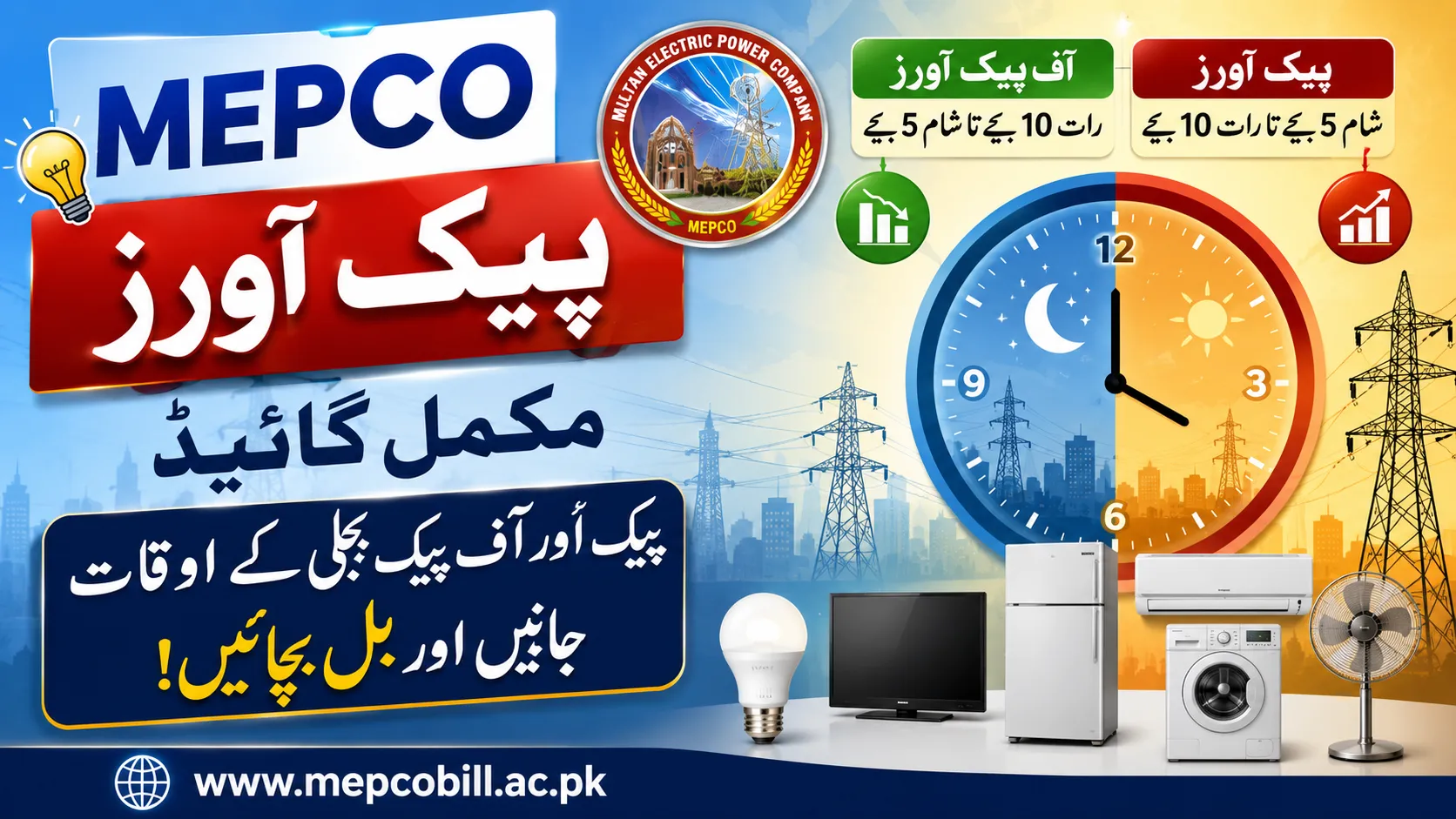
Peak hours are periods of the day when overall electricity demand is higher than usual. During these times, many consumers use electricity simultaneously, increasing the load on the electricity network.
Typical activities that contribute to higher demand include:
- Returning home after work
- Using air conditioners during hot weather
- Cooking evening meals
- Operating commercial equipment during business hours
- Industrial production
- Increased lighting after sunset
Because electricity demand rises during these periods, power systems must balance supply and demand carefully to maintain reliable service.
Peak hours are one part of the broader electricity management system and should not be confused with electricity outages or load shedding schedules.
What Are Off-Peak Hours?
Off-peak hours are periods when overall electricity demand is lower.
During these hours, many households and businesses are using less electricity, reducing the overall demand on the electricity system.
Examples of lower-demand periods may include:
- Late-night hours
- Early morning hours
- Other periods identified under the applicable tariff framework
The specific application of peak and off-peak periods depends on the applicable electricity tariffs and consumer category. Always refer to the latest official information if you need the current schedule.
Why Do Peak Hours Exist?
Electricity cannot always be stored economically on a large scale, so supply must closely match demand throughout the day.
However, electricity demand is not constant.
Instead, it changes according to:
- Household routines
- Business operating hours
- Industrial production schedules
- Weather conditions
- Seasonal changes
- Public holidays
- School schedules
During certain periods, millions of consumers may use electricity at the same time, creating a significant increase in demand.
Peak-hour concepts help electricity systems plan for these fluctuations and encourage efficient use of available resources.
Why Understanding Peak Hours Matters
Many consumers focus only on the total amount shown on their electricity bill.
Understanding peak hours provides additional context by explaining how electricity demand changes over time and how time-of-use concepts may apply to certain tariff categories.
Learning about peak hours can help you:
Better Understand Electricity Usage
Knowing when demand is generally higher helps explain why electricity systems distinguish between different periods of the day.
Improve Energy Awareness
By paying attention to when electricity is used, consumers can better understand their own usage patterns.
Support Better Planning
Households and businesses can review their daily routines and identify opportunities to use electricity more efficiently where practical.
Understand Tariff Concepts
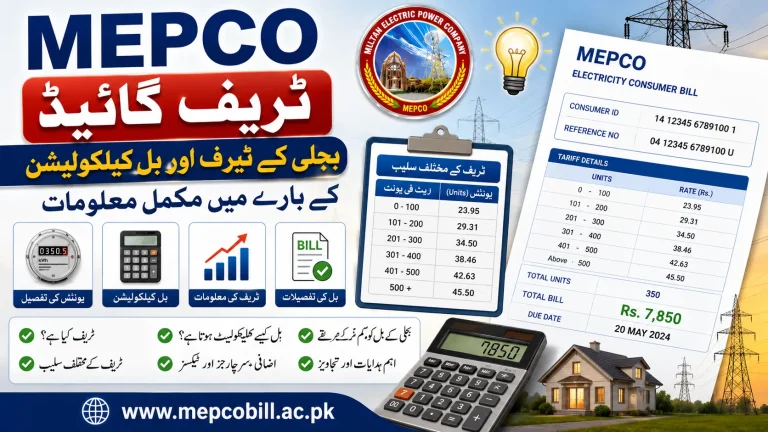
Peak hours are closely related to electricity tariffs and are discussed in more detail within our MEPCO Tariff Guide.
How Electricity Demand Changes Throughout the Day
Electricity usage follows predictable patterns in many regions.
Although every household and business is different, overall demand often rises and falls during the day as people change their activities.
Morning
Electricity usage begins to increase as people prepare for work, school, and daily routines.
Common appliance usage includes:
- Water pumps
- Electric kettles
- Lighting
- Fans
- Kitchen appliances
Afternoon
Demand varies depending on:
- Weather
- Commercial activity
- Industrial operations
- Educational institutions
In warmer months, cooling appliances may contribute to higher electricity usage.
Evening
The evening is often associated with increased electricity usage because many people are at home simultaneously.
Common appliances include:
- Air conditioners
- Ceiling fans
- Lighting
- Televisions
- Refrigerators
- Electric cooking appliances
This period frequently represents one of the highest demand levels in the daily electricity cycle.
Night
Electricity demand generally decreases as commercial activity slows and many consumers reduce appliance usage.
However, refrigerators, security systems, and other essential equipment continue operating.
Who Is Affected by Peak Hours?
Different consumer categories may be affected differently depending on the applicable tariff framework and electricity connection.
Residential Consumers
Households may observe higher electricity usage during evenings when family members are home and appliances are used more frequently.
Commercial Consumers
Businesses often consume electricity during operating hours, with demand varying according to business type and equipment.
Industrial Consumers
Industrial facilities may operate continuously or in shifts, resulting in different electricity demand patterns throughout the day.
Agricultural Consumers
Electricity usage depends on irrigation schedules, farming activities, and operational requirements.
Peak Hours and Electricity Tariffs
Peak hours are closely connected to electricity tariffs.
Some tariff structures distinguish between electricity consumed during higher-demand periods and lower-demand periods.
The exact application depends on the consumer category and the tariff framework in effect.
Understanding this relationship helps explain why electricity providers discuss:
- Peak demand
- Off-peak demand
- Consumer categories
- Time-based electricity usage
For a broader explanation of electricity pricing, see our MEPCO Tariff Guide.
Peak Hours vs. Load Shedding
Many consumers mistakenly assume that peak hours and load shedding are the same.
They are different concepts.
Peak Hours
Peak hours describe periods when overall electricity demand is relatively high.
Load Shedding
Load shedding refers to planned interruptions in electricity supply that may occur for various operational reasons.
Understanding this distinction helps avoid confusion when reading electricity-related information.
Common Appliances Used During Peak Hours
Many household appliances contribute significantly to electricity demand during busy periods.
Examples include:
- Air Conditioners
- Electric Geysers
- Water Pumps
- Electric Irons
- Electric Ovens
- Microwave Ovens
- Washing Machines
- Dishwashers
- Refrigerators
- Electric Heaters
The way and timing of appliance use can influence overall electricity consumption throughout the day.
Why This Guide Is Important
Peak hours are one of the most widely discussed topics in electricity billing, yet many consumers are unsure what the term actually means.
Understanding this concept helps you:
- Better interpret electricity bills
- Understand electricity demand
- Learn how tariffs relate to usage patterns
- Use the Bill Calculator with greater context
- Make informed decisions about electricity use
How Peak Hours Influence Your Electricity Usage
Understanding peak hours is useful because it helps explain when electricity demand is generally higher and how daily habits influence overall energy consumption.
Although every household and business uses electricity differently, many consumers follow similar routines. As a result, electricity demand often rises during certain periods of the day when millions of people use electrical appliances at the same time.
Knowing this pattern helps consumers better understand the broader electricity system and the concepts discussed in electricity tariffs.
Daily Electricity Consumption Patterns
Electricity demand changes continuously throughout the day.
Let’s look at a typical daily pattern.
Early Morning
Electricity demand begins increasing as people prepare for work, school, and daily activities.
Common appliances used include:
- Lights
- Water Pumps
- Electric Kettles
- Kitchen Appliances
- Water Heaters
- Fans
Although household demand increases, many commercial businesses have not yet reached full operating capacity.
Working Hours
During business hours, electricity demand shifts toward:
- Offices
- Retail Stores
- Shopping Centers
- Factories
- Educational Institutions
- Government Offices
Commercial and industrial activities become major contributors to electricity demand.
Afternoon
Weather often plays an important role during afternoon hours.
In warmer seasons, increased use of:
- Air Conditioners
- Cooling Systems
- Refrigerators
can significantly increase electricity consumption.
Evening
The evening is commonly associated with one of the highest levels of electricity demand.
Many people:
- Return home
- Prepare meals
- Turn on lighting
- Watch television
- Use air conditioners
- Charge electronic devices
Because these activities occur across many households simultaneously, overall electricity demand often rises.
Late Night
Electricity demand generally decreases as businesses close and many household appliances are switched off.
Essential appliances such as refrigerators and security systems continue operating, but overall consumption is often lower.
How Households Can Plan Electricity Usage
Understanding daily demand patterns helps consumers think more strategically about electricity use.
Where practical and appropriate, some activities can be scheduled during periods of lower overall demand.
Examples include:
- Laundry
- Ironing
- Water pumping
- Charging rechargeable devices
- Running certain household appliances
The suitability of these practices depends on your household routine, appliance requirements, and applicable tariff structure.
Electricity Usage in Different Seasons
Seasonal changes have a major impact on electricity consumption.
Summer
Summer usually brings higher electricity usage because of cooling requirements.
Common appliances include:
- Air Conditioners
- Ceiling Fans
- Water Coolers
- Refrigerators
As temperatures rise, these appliances often operate for longer periods.
Winter
In colder months, electricity consumption may increase because of:
- Electric Heaters
- Water Heaters
- Heating Equipment
Households that rely on electric heating often notice seasonal changes in their electricity usage.
Rainy Weather
Weather conditions can also influence electricity consumption.
For example:
- Increased indoor activities
- Greater lighting requirements
- Different appliance usage patterns
These changes contribute to variations in monthly electricity bills.
Peak Hours and Household Appliances
Some appliances consume considerably more electricity than others.
Understanding which appliances have a greater impact can help consumers monitor their electricity usage more effectively.
High Electricity Consumption Appliances
Examples include:
- Air Conditioners
- Electric Geysers
- Electric Heaters
- Water Pumps
- Electric Ovens
- Deep Freezers
These appliances generally contribute more to monthly electricity consumption.
Moderate Electricity Consumption Appliances
Examples include:
- Refrigerators
- Washing Machines
- Desktop Computers
- Microwave Ovens
Lower Electricity Consumption Appliances
Examples include:
- LED Bulbs
- LED Televisions
- Wi-Fi Routers
- Mobile Chargers
- Small Electronic Devices
Although individual devices may consume relatively little electricity, their combined usage over time still contributes to overall consumption.
Peak Hours and Commercial Businesses
Commercial establishments have different electricity usage patterns compared with households.
Examples include:
- Retail Shops
- Restaurants
- Hotels
- Offices
- Shopping Centres
- Service Businesses
Electricity consumption depends on:
- Business hours
- Customer activity
- Equipment used
- Seasonal demand
Businesses often review electricity usage regularly to better understand operational costs.
Peak Hours and Industrial Consumers
Industrial facilities generally have larger electricity requirements than residential consumers.
Electricity is commonly used for:
- Manufacturing Equipment
- Production Lines
- Industrial Machinery
- Processing Systems
Some industrial operations run continuously, while others operate in shifts.
Understanding electricity demand patterns helps industrial consumers manage operational planning.
Peak Hours and Agricultural Consumers
Agricultural electricity consumption depends largely on farming activities.
Examples include:
- Irrigation Pumps
- Tube Wells
- Water Distribution Systems
Electricity demand may vary according to:
- Crop type
- Irrigation schedules
- Seasonal weather
- Agricultural operations
Common Misconceptions About Peak Hours
Several misconceptions frequently appear among electricity consumers.
Misconception 1: Peak Hours Mean Higher Electricity Consumption
Not necessarily.
Peak hours refer to periods when overall demand across the electricity system is higher.
An individual consumer’s electricity usage depends on how and when they use their own appliances.
Misconception 2: Peak Hours Mean Load Shedding
No.
Peak hours describe demand patterns.
Load shedding refers to interruptions in electricity supply for operational reasons.
They are different concepts.
Misconception 3: Every Consumer Is Affected in the Same Way
Different consumer categories may be subject to different tariff structures and billing rules.
The impact of peak-hour concepts depends on the applicable tariff category.
How Peak Hours Relate to Your Electricity Bill
Although electricity units remain one of the most important factors in billing, understanding peak hours provides additional context.
Your electricity bill reflects:
- Electricity consumption
- Billing period
- Consumer category
- Applicable tariff framework
- Other billing components shown on the official bill
Peak-hour concepts help explain why electricity providers discuss demand management and time-of-use principles.
Planning Your Electricity Usage
Whether you’re managing a household or a business, planning electricity usage can improve awareness of energy consumption.
Good practices include:
- Reviewing monthly bills
- Monitoring appliance usage
- Comparing seasonal consumption
- Keeping records of electricity usage
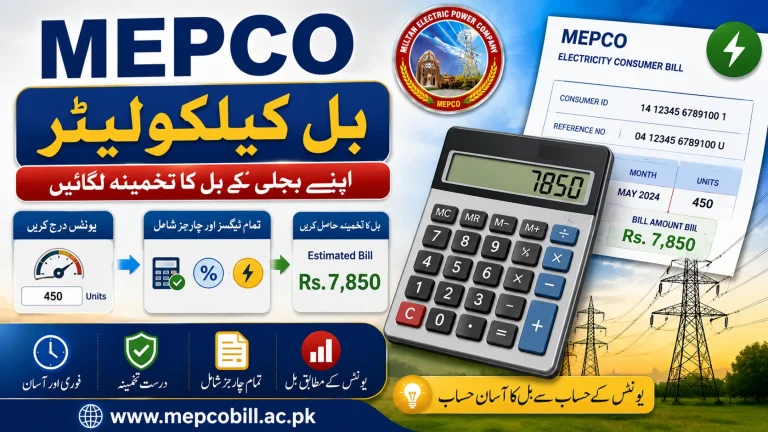
- Using the Bill Calculator to estimate monthly expenses
Planning doesn’t necessarily mean changing every routine—it means understanding how electricity is used and making informed decisions where practical.
Related Resources
To understand electricity billing more completely, explore these guides available on our website:
- MEPCO Consumer Number
- MEPCO Reference Number
- MEPCO Bill Calculator
- MEPCO Tariff Guide
- Fuel Price Adjustment (FPA)
- Quarterly Tariff Adjustment (QTR)
- Electricity Charges Explained
These resources work together to provide a complete understanding of electricity billing and account management.
Best Practices for Managing Electricity Usage During Peak Hours
Understanding peak hours is valuable, but the real benefit comes from using that knowledge to make informed decisions about electricity consumption. Whether you are a homeowner, business owner, or property manager, developing efficient electricity usage habits can help you monitor your consumption more effectively.
Remember that every household and business has different energy needs. The suggestions below are general best practices and should be adapted to your specific circumstances.
Monitor Your Monthly Electricity Consumption
One of the easiest ways to understand your electricity usage is to compare your monthly bills.
Reviewing previous bills allows you to:
- Compare electricity units consumed
- Identify seasonal trends
- Notice unexpected increases
- Track the impact of new appliances
- Understand long-term electricity usage
Maintaining a record of your monthly bills also makes budgeting much easier.
Understand Your High-Consumption Appliances
Not every electrical appliance contributes equally to your monthly electricity usage.
Common appliances with higher electricity consumption include:
- Air Conditioners
- Electric Geysers
- Electric Heaters
- Water Pumps
- Electric Ovens
- Deep Freezers
Using these appliances efficiently can help you better understand your overall energy consumption.
Maintain Your Electrical Appliances
Well-maintained appliances often operate more efficiently.
Simple maintenance practices include:
- Cleaning air-conditioner filters
- Checking refrigerator door seals
- Servicing water pumps
- Maintaining electrical wiring where necessary
- Following manufacturer maintenance recommendations
Regular maintenance can improve appliance performance and help you better understand changes in electricity consumption.
Use Natural Resources When Practical
Depending on your environment and daily routine, simple habits can reduce unnecessary electricity usage.
Examples include:
- Opening curtains during daylight hours instead of using artificial lighting
- Improving natural ventilation before switching on cooling equipment
- Turning off lights in unoccupied rooms
- Switching off appliances that are not in use
Small changes can contribute to greater awareness of electricity consumption over time.
Organize Your Electricity Records
Keeping your electricity records organized provides several benefits.
Maintain copies of:
- Monthly Electricity Bills
- Duplicate Bills
- Consumer Number
- Reference Number
- Payment Receipts
- Meter Reading Records (where applicable)
Organized records make it easier to compare consumption and resolve billing questions if they arise.
Understand Your Tariff Category
Your electricity tariff category provides important context for understanding your bill.
Learning about:
- Consumer Categories
- Tariff Structures
- Peak and Off-Peak Concepts
- Billing Components
helps you interpret your monthly electricity bill with greater confidence.
For a complete explanation, refer to our MEPCO Tariff Guide.
Frequently Asked Questions
1. What are MEPCO Peak Hours?
Peak hours are periods during the day when overall electricity demand is generally higher because many consumers are using electricity at the same time.
2. What are Off-Peak Hours?
Off-peak hours are periods when overall electricity demand is comparatively lower.
3. Why are Peak Hours important?
Peak hours help explain how electricity demand changes throughout the day and how time-of-use concepts may apply within certain tariff structures.
4. Do Peak Hours affect every consumer?
The effect of peak-hour concepts depends on the applicable tariff category and billing framework. Not every consumer is affected in the same way.
5. Are Peak Hours the same as Load Shedding?
No.
Peak hours describe periods of higher electricity demand.
Load shedding refers to planned interruptions in electricity supply for operational reasons.
6. Why is electricity demand higher during certain times?
Electricity demand increases when many households, businesses, and industries use electrical appliances simultaneously.
7. Which household appliances consume the most electricity?
Examples include:
- Air Conditioners
- Electric Heaters
- Electric Geysers
- Water Pumps
- Electric Ovens
Actual electricity consumption depends on appliance efficiency and duration of use.
8. Can understanding Peak Hours help me manage electricity usage?
Yes.
Understanding demand patterns can help consumers become more aware of when and how they use electricity.
9. Does weather affect Peak Hours?
Weather often influences electricity demand.
Hot weather may increase cooling appliance usage, while colder weather may increase heating-related electricity consumption.
10. Can businesses benefit from understanding Peak Hours?
Yes.
Businesses can review electricity usage patterns as part of broader operational planning and energy management.
11. What is the relationship between Peak Hours and electricity tariffs?
Some tariff structures distinguish between higher-demand and lower-demand periods depending on the applicable consumer category and regulatory framework.
12. Where can I learn more about electricity tariffs?
Our MEPCO Tariff Guide explains electricity tariffs, consumer categories, billing components, and related concepts in detail.
13. Can I estimate my electricity bill using Peak Hour information?
Peak-hour concepts provide context for understanding electricity usage. For bill estimates, use our MEPCO Bill Calculator.
14. Why should I save previous electricity bills?
Previous bills help you:
- Compare electricity usage
- Monitor seasonal changes
- Track billing history
- Organize account records
15. How can I better understand my electricity bill?
Read the bill carefully, review your units consumed, understand your tariff category, compare previous bills, and use our educational guides to learn more about each billing component.
Related MEPCO Guides
Continue exploring our electricity knowledge center with these helpful resources:
- MEPCO Online Bill
- MEPCO Duplicate Bill
- MEPCO Consumer Number Guide
- MEPCO Reference Number Guide
- MEPCO Bill Calculator
- MEPCO Tariff Guide
- Fuel Price Adjustment (FPA) Guide
- Quarterly Tariff Adjustment (QTR) Guide
- Electricity Charges Explained
- Protected vs. Non-Protected Consumers
- Electricity Saving Tips
- Online Bill Payment Methods
These guides are designed to answer common consumer questions and provide practical information about electricity billing and account management.
Why Understanding Peak Hours Matters
Many people hear the term Peak Hours but never receive a clear explanation of what it means.
This guide has explained:
- What peak hours are
- What off-peak hours are
- Why electricity demand changes during the day
- How different consumer categories use electricity
- The relationship between peak hours and tariffs
- Common misconceptions
- Practical ways to understand electricity usage
Rather than focusing only on the total amount shown on your electricity bill, understanding these concepts gives you a broader picture of how electricity demand and consumption work.
Conclusion
The MEPCO Peak Hours Guide is intended to help electricity consumers understand one of the most important concepts in electricity management. Peak hours are not simply about specific times of the day. They represent periods of higher overall demand on the electricity system.
By learning how electricity demand changes, understanding your tariff category, monitoring your monthly consumption, and using tools such as the MEPCO Bill Calculator, you can better interpret your electricity bill and make informed decisions about your electricity usage.
As our knowledge center continues to grow, we’ll add more practical guides explaining every aspect of electricity billing so consumers have a single place to find clear and reliable information.
Continue Learning About Your Electricity Bill
Now that you understand the concept of peak hours, explore our additional resources to gain a complete understanding of electricity billing.
You can:
- Check your latest MEPCO Online Bill
- Download a Duplicate Bill
- Find your Consumer Number
- Locate your Reference Number
- Estimate costs using the MEPCO Bill Calculator
- Understand your Tariff Category
- Learn about Fuel Price Adjustment (FPA)
- Read about Quarterly Tariff Adjustment (QTR)
- Explore Electricity Charges Explained
Our goal is to make electricity billing easier to understand through practical tools, clear explanations, and comprehensive educational guides.