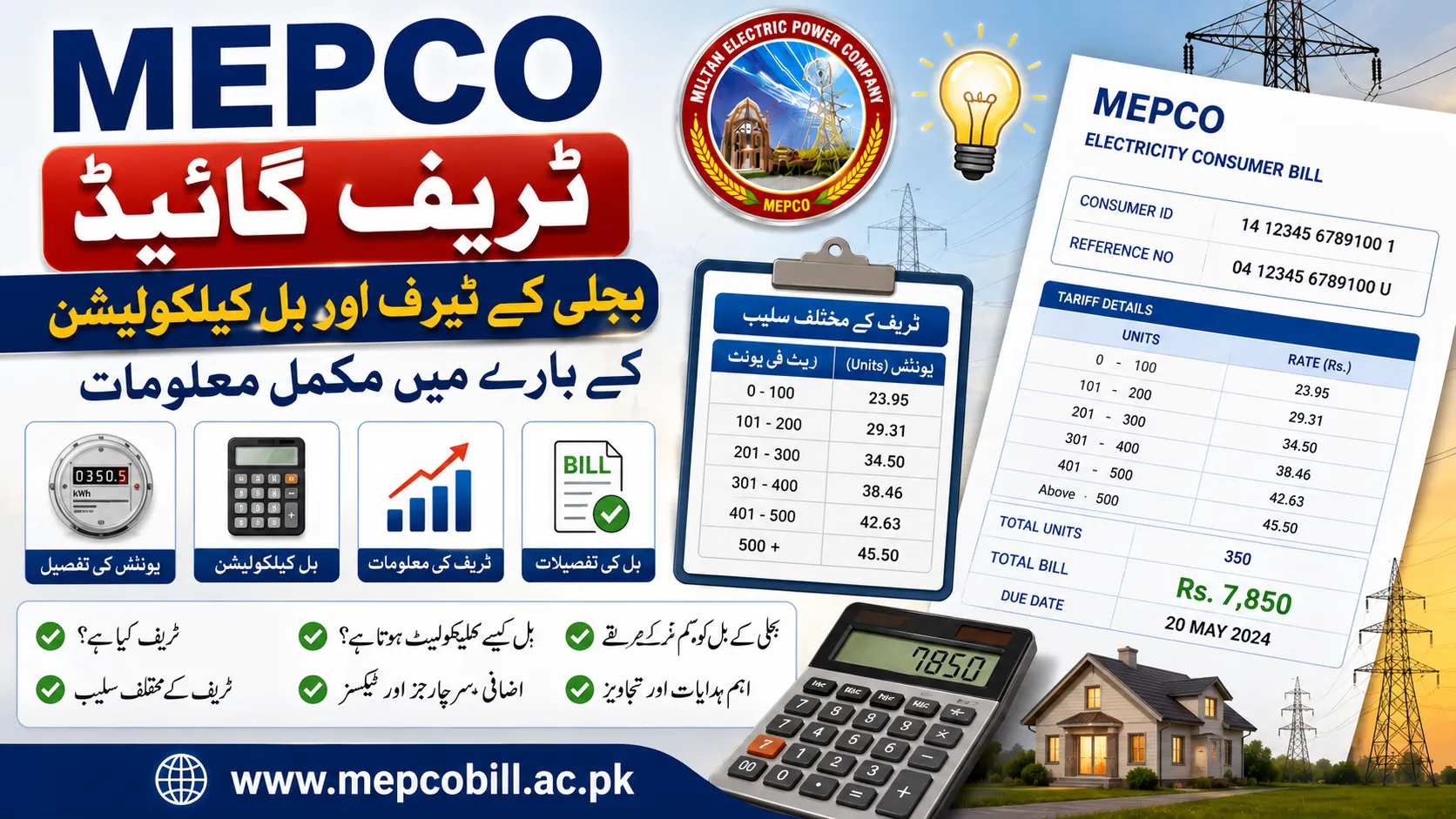
MEPCO Tariff Guide – Complete Guide to Electricity Tariffs & Bill Calculation
Understand how the MEPCO electricity tariffs work, understand consumer categories, protected and non-protected consumers, electricity units, and the factors that influence your monthly electricity bill. Here is the complete detail about it
Understand How MEPCO Electricity Tariffs Affect Your Monthly Bill
Every month, millions of electricity consumers receive a bill that includes several different charges. While most people focus on the total payable amount, many are unsure how that amount is calculated or why electricity bills change from one month to another.
The answer lies in the electricity tariff.
A tariff is the pricing framework used to calculate electricity charges. It determines how electricity usage is priced for different categories of consumers and forms the basis of your monthly electricity bill.
Whether you are a homeowner, shop owner, business operator, farmer, or industrial consumer, understanding electricity tariffs can help you:
- Understand your monthly electricity bill
- Compare electricity usage over time
- Interpret billing components
- Estimate future electricity costs
- Make informed decisions about energy consumption
This guide explains electricity tariffs in clear, easy-to-understand language. It also introduces important billing concepts that you’ll encounter on your monthly electricity bill and links to more detailed guides available on our website.
What Is an Electricity Tariff?
An electricity tariff is the pricing structure used to calculate the cost of electricity supplied to consumers.
Rather than using a single price for everyone, electricity providers apply different tariff categories based on the type of electricity connection and the applicable regulatory framework.
In simple terms, a tariff defines how electricity charges are calculated for a particular category of consumer.
A tariff generally considers factors such as:
- Consumer category
- Electricity consumption
- Applicable billing rules
- Regulatory decisions
- Other billing components included on the official bill
Understanding tariffs helps explain why two consumers with different connection types—or different usage patterns—may receive different electricity bills.
Why Do Electricity Tariffs Exist?
Electricity distribution involves generating, transmitting, maintaining, and delivering power to millions of consumers. Tariffs provide a structured method for determining how electricity charges are calculated across different consumer categories.
A tariff framework helps:
- Apply billing rules consistently
- Differentiate between consumer categories
- Reflect the type of electricity connection
- Support transparent billing calculations
For consumers, understanding the tariff category shown on the electricity bill provides valuable context when reviewing monthly charges.
Why Understanding Your Tariff Matters
Many consumers only look at the total amount payable on their electricity bill. However, knowing your tariff category can help you better understand how your bill is structured.
Learning about tariffs allows you to:
Better Understand Your Bill
Electricity bills contain multiple sections. Knowing how tariffs relate to energy charges helps make these sections easier to interpret.
Estimate Future Expenses
When combined with a bill calculator and your monthly unit consumption, an understanding of tariff categories can help you estimate future electricity costs.
Monitor Electricity Usage
Reviewing your tariff alongside your monthly electricity usage can help identify seasonal changes or shifts in consumption.
Improve Financial Planning
Electricity is an ongoing household or business expense. Understanding the factors that influence your bill can make budgeting easier.
How Electricity Tariffs Influence Your Bill
Your monthly electricity bill is not based solely on the number of units consumed.
Several factors contribute to the total payable amount, including:
- Units consumed during the billing period
- Applicable tariff category
- Billing rules
- Taxes and duties
- Regulatory adjustments
- Other charges shown on the official bill
Because these components may change over time, electricity bills can vary from month to month even if your consumption appears similar.
Understanding Electricity Units
Before learning about tariff categories, it’s important to understand the basic unit of electricity measurement.
Electricity consumption is measured in kilowatt-hours (kWh).
On electricity bills, a kilowatt-hour is commonly referred to as a unit.
Every electrical appliance contributes to the total number of units consumed during the billing period.
Examples include:
- Air conditioners
- Refrigerators
- Water pumps
- Electric geysers
- Ceiling fans
- LED lighting
- Washing machines
- Microwave ovens
- Computers
- Televisions
The total number of units recorded by your electricity meter is one of the primary inputs used to calculate electricity charges.
How Is Electricity Consumption Measured?
Your electricity meter records the amount of electrical energy used by your property.
Each billing cycle generally includes:
- Previous meter reading
- Current meter reading
- Total units consumed
The difference between the two readings represents the electricity used during the billing period.
Understanding meter readings helps consumers:
- Verify monthly usage
- Compare consumption trends
- Identify unusual increases
- Better understand billing information
Major Consumer Categories
Electricity consumers are grouped into different categories based on the nature of the electricity connection.
Although the specific billing rules may vary, the following categories are commonly used.
Residential Consumers
Residential connections are intended for homes, apartments, and other domestic properties where electricity is used primarily for household purposes.
Typical residential usage includes:
- Lighting
- Fans
- Refrigeration
- Air conditioning
- Kitchen appliances
- Home electronics
Residential consumers often benefit from educational resources such as bill calculators, duplicate bill services, and energy-saving guides.
Commercial Consumers
Commercial connections are generally used by businesses and retail establishments.
Examples include:
- Shops
- Restaurants
- Offices
- Shopping centers
- Hotels
- Service businesses
Commercial electricity usage often differs from residential usage because businesses may operate for longer hours and use different types of equipment.
Industrial Consumers
Industrial connections are used by factories and manufacturing facilities where electricity powers production processes, machinery, and large-scale operations.
Industrial consumers often have different electricity requirements and consumption patterns compared with residential or commercial users.
Agricultural Consumers
Agricultural electricity connections are commonly associated with irrigation systems, tube wells, and other farming-related activities.
Electricity usage in agriculture may vary depending on seasonal irrigation needs and farming operations.
Public Sector and Institutional Consumers
Electricity is also supplied to:
- Government offices
- Schools
- Universities
- Hospitals
- Public organizations
These institutions rely on electricity for daily operations and essential public services.
Protected and Non-Protected Consumers
One of the most discussed topics in electricity billing is the distinction between protected and non-protected consumers.
These categories are determined under the applicable regulatory framework and can influence how electricity charges are calculated.
Rather than focusing only on the names, it is important to understand that these categories are based on specific eligibility criteria defined by the relevant authorities.
In our dedicated Protected vs. Non-Protected Consumers Guide, we’ll explain:
- What these categories mean
- How they are determined
- Why they matter
- How they may influence electricity billing
How Tariff Categories Affect Different Consumers
Different consumer categories often have different electricity usage patterns.
For example:
Household Consumers
Electricity usage may increase during summer because of air conditioners and cooling appliances.
Businesses
Commercial establishments often consume electricity throughout business hours, with usage depending on the type of business and equipment.
Industries
Factories may have continuous or shift-based operations, resulting in different demand patterns.
Agricultural Users
Electricity consumption can vary with irrigation schedules and seasonal agricultural activity.
Understanding these differences helps explain why electricity billing frameworks distinguish between consumer categories.
Common Misconceptions About Electricity Tariffs
Many consumers have questions about how tariffs work. Here are a few common misconceptions.
“Everyone pays the same rate.”
Electricity billing depends on several factors, including the applicable tariff category and the billing rules in effect.
“Only units determine my bill.”
Units consumed are an important factor, but official bills may also include other applicable billing components.
“A bill calculator always matches the official bill.”
A calculator provides an estimate based on available information. The official bill remains the authoritative record of charges.
Why This Guide Matters
Understanding electricity tariffs is one of the best ways to make sense of your monthly electricity bill. Instead of viewing the bill as a single amount due, you’ll be able to recognize the relationship between your consumption, tariff category, and the various billing components that contribute to the final total.
In the next part of this guide, we’ll explain the main components of an electricity bill, including energy charges, fixed charges, taxes, Fuel Price Adjustment (FPA), Quarterly Tariff Adjustment (QTR), and the concepts of peak and off-peak hours.
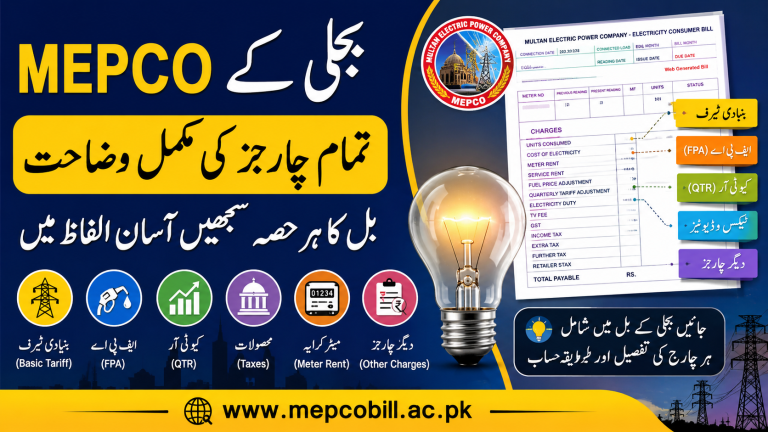
Understanding the Main Components of Your MEPCO Electricity Bill
Now that you understand what an electricity tariff is and why different tariff categories exist, it’s time to explore the individual components that make up your monthly electricity bill.
Many consumers look only at the Total Payable Amount, but an electricity bill contains several separate billing elements. Each component represents a different part of the billing process and helps explain how the final amount is determined.
Learning what these sections mean can help you:
- Understand your electricity bill more confidently
- Compare monthly billing trends
- Review your electricity consumption
- Identify changes from one billing cycle to another
- Better estimate future electricity costs
Energy Charges
Energy charges are one of the primary components of an electricity bill.
These charges are generally based on:
- Total electricity units consumed
- Applicable tariff category
- Billing rules in effect during the billing period
Because energy usage changes from month to month, energy charges also vary.
For example:
- Running an air conditioner for longer periods during summer usually increases electricity consumption.
- Seasonal irrigation may increase electricity usage for agricultural consumers.
- Commercial businesses often have different operating hours than households, resulting in different consumption patterns.
The greater the electricity usage, the greater the energy charges are likely to be.
Fixed Charges
Some electricity connections may include fixed charges in addition to energy charges.
Unlike energy charges, fixed charges are generally not directly linked to the number of units consumed.
Instead, they relate to the electricity connection itself and other applicable billing rules.
Depending on the applicable tariff framework, fixed charges may vary across different consumer categories.
Because billing policies can change over time, always refer to your official bill and current tariff information for the applicable details.
Electricity Units and Their Role in Billing
Electricity usage is measured in kilowatt-hours (kWh), commonly referred to as units.
Every appliance connected to your electrical system contributes to your monthly unit consumption.
Examples include:
High Electricity Consumption
- Air Conditioners
- Electric Geysers
- Electric Heaters
- Water Pumps
- Electric Ovens
- Deep Freezers
Moderate Electricity Consumption
- Refrigerators
- Washing Machines
- Microwave Ovens
- Desktop Computers
Lower Electricity Consumption
- LED Bulbs
- LED Televisions
- Wi-Fi Routers
- Mobile Chargers
Monitoring appliance usage can help you understand why electricity consumption changes from month to month.
Fuel Price Adjustment (FPA)
One item that many consumers notice on their electricity bill is the Fuel Price Adjustment (FPA).
Fuel Price Adjustment reflects changes in fuel-related electricity generation costs as determined under the applicable regulatory framework. Because these costs can change over time, the adjustment shown on electricity bills may also vary.
Rather than viewing FPA as a permanent charge, it is better understood as an adjustment that can increase or decrease depending on the relevant billing period and regulatory decisions.
Our dedicated Fuel Price Adjustment (FPA) Guide explains:
- What FPA means
- Why it appears on electricity bills
- How it may affect monthly charges
- Frequently asked consumer questions
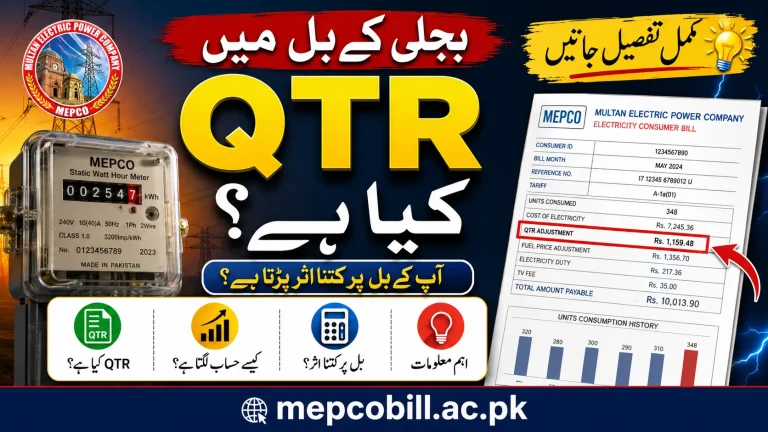
Quarterly Tariff Adjustment (QTR)
Another billing component that consumers may encounter is the Quarterly Tariff Adjustment (QTR).
Quarterly Tariff Adjustment is applied according to the applicable regulatory process and may appear on electricity bills when relevant.
Like other adjustments, it can vary over time and should be interpreted within the context of the billing period shown on your official bill.
Our detailed Quarterly Tariff Adjustment Guide explains:
- What QTR is
- Why it appears
- How it differs from FPA
- Common consumer questions
Taxes and Duties
Electricity bills may also include taxes or duties required under applicable laws and regulations.
Depending on the billing period and consumer category, your bill may include one or more tax-related components.
These items are shown separately to improve transparency and help consumers understand how the total payable amount is calculated.
Because tax policies may change, the exact items appearing on a bill can vary over time.
Other Billing Adjustments
In addition to energy charges and taxes, official electricity bills may include other adjustments required under the applicable billing framework.
Examples include:
- Regulatory adjustments
- Billing corrections
- Other approved charges shown on the bill
Each adjustment should be reviewed in the context of the official bill for the relevant billing period.
Peak and Off-Peak Hours
Electricity demand changes throughout the day.
In many electricity systems, certain times experience higher demand than others.
These periods are commonly referred to as:
- Peak Hours
- Off-Peak Hours
The specific application of peak and off-peak billing depends on the consumer category and the applicable tariff rules.
Understanding these concepts is especially useful for consumers whose tariff category includes time-based pricing.
We’ll cover this topic in detail in our dedicated MEPCO Peak Hours Guide.
How Tariffs Affect Different Types of Consumers
Electricity tariffs are designed to accommodate the different ways consumers use electricity.
Residential Consumers
Households often experience seasonal increases in electricity usage due to cooling or heating appliances.
Common residential appliances include:
- Fans
- Air Conditioners
- Refrigerators
- Televisions
- Washing Machines
- Kitchen Appliances
Monitoring electricity usage throughout the year can help households better understand changes in their bills.
Commercial Consumers
Commercial establishments typically consume electricity during business hours.
Examples include:
- Retail Shops
- Restaurants
- Offices
- Hotels
- Shopping Centres
Electricity usage depends on business size, operating hours, and equipment.
Industrial Consumers
Factories and industrial facilities generally consume larger amounts of electricity because of production equipment and machinery.
Industrial electricity demand often differs significantly from residential usage.
Agricultural Consumers
Agricultural electricity usage depends largely on irrigation schedules and farming activities.
Seasonal variations often influence electricity consumption throughout the year.
Illustrative Billing Scenario
Consider two households.
Household A
- Uses relatively fewer electrical appliances.
- Experiences moderate electricity usage throughout the month.
Household B
- Uses multiple air conditioners.
- Operates electric water heating.
- Has higher appliance usage during summer.
Even if both households receive electricity from the same distribution company, their monthly bills may differ because of differences in electricity consumption and the applicable billing framework.
This example demonstrates why understanding tariffs and electricity usage together provides a more complete picture than looking only at the total bill amount.
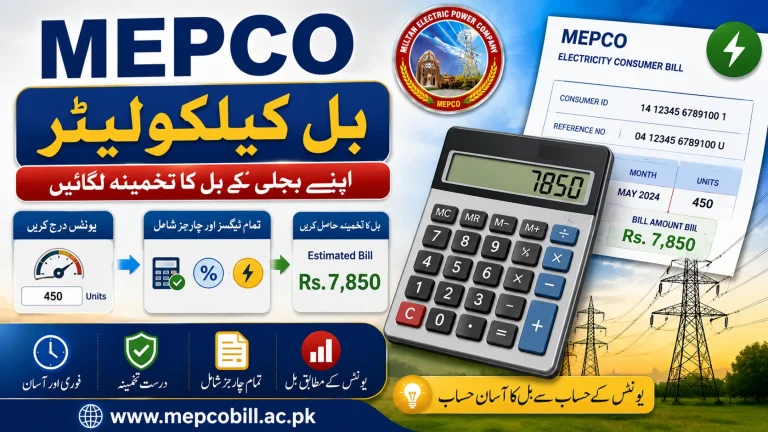
How the MEPCO Bill Calculator Complements the Tariff Guide
Our MEPCO Bill Calculator and Tariff Guide work together.
The calculator helps you estimate electricity costs based on your usage.
The tariff guide explains:
- Why bills vary
- How electricity charges are structured
- What billing components mean
- Why official bills may differ from estimates
Together, these resources help consumers better understand electricity billing rather than simply viewing the total payable amount.
Related Guides
For a complete understanding of electricity billing, we recommend exploring these additional resources:
- MEPCO Online Bill
- MEPCO Duplicate Bill
- MEPCO Consumer Number
- MEPCO Reference Number
- MEPCO Bill Calculator
- MEPCO Peak Hours
- Fuel Price Adjustment (FPA)
- Quarterly Tariff Adjustment (QTR)
- Electricity Charges Explained
Each guide focuses on one topic in detail while supporting the others through clear internal navigation.
How to Identify Your Tariff Category on Your Electricity Bill
Many consumers want to know which tariff category applies to their electricity connection. Your official electricity bill contains important account information that helps identify the billing details associated with your connection.
Depending on the bill format and applicable billing information, you may find details such as:
- Consumer Category
- Connection Type
- Billing Month
- Consumer Number
- Reference Number
- Meter Reading
- Units Consumed
- Electricity Charges
If you are unsure about the tariff category shown on your bill, compare it with your connection type or use the appropriate customer support channels for clarification.
Understanding your tariff category helps you interpret your bill more accurately and better understand how electricity charges are determined.
How to Read Your Electricity Bill More Effectively
Many consumers focus only on the total payable amount.
However, reviewing the complete bill provides a better understanding of your monthly electricity usage.
Pay attention to:
Customer Information
Verify that your name, service address, Consumer Number, and Reference Number match your electricity connection.
Billing Period
Review the billing month and billing cycle so you know which period the bill covers.
Meter Readings
Compare the previous and current meter readings to understand how your unit consumption has been calculated.
Units Consumed
Tracking monthly units helps identify seasonal trends and changes in electricity usage.
Electricity Charges
Review the energy charges together with any other applicable billing components listed on the official bill.
Due Date
Paying before the due date helps you avoid any late-payment consequences specified by the electricity provider.
Practical Tips for Managing Electricity Costs
Understanding tariffs is only one part of managing electricity expenses. Monitoring your electricity usage and adopting efficient habits can also help.
Track Monthly Consumption
Keep a record of the units consumed each month.
Comparing monthly bills allows you to identify:
- Seasonal increases
- Appliance-related changes
- Long-term consumption trends
Download and Save Your Bills
Maintaining PDF copies of your electricity bills makes it easier to:
- Compare billing months
- Review previous charges
- Organize household records
- Locate your Consumer Number and Reference Number
Review Your Bill Before Payment
Before making a payment:
- Confirm the customer details.
- Check the billing period.
- Review meter readings.
- Verify the total payable amount.
If something appears unusual, consult the appropriate customer support channels before taking further action.
Use Energy Efficiently
Simple habits can help reduce unnecessary electricity consumption, such as:
- Turning off unused lights and fans
- Choosing energy-efficient appliances
- Maintaining cooling equipment regularly
- Using natural light during the day where possible
While every household is different, monitoring electricity usage can help you understand the impact of these changes over time.
Frequently Asked Questions
1. What is a MEPCO tariff?
A tariff is the pricing framework used to determine how electricity charges are calculated for different categories of consumers.
2. Why do electricity tariffs matter?
Tariffs help explain how electricity usage, consumer categories, and other billing components contribute to your monthly bill.
3. Why does my electricity bill change every month?
Electricity bills can vary because of changes in consumption, billing periods, applicable tariffs, taxes, regulatory adjustments, and seasonal appliance use.
4. What is the difference between a tariff and my electricity bill?
A tariff describes the pricing framework, while your electricity bill is the official document showing the charges for a specific billing period.
5. How can I estimate my electricity bill?
You can use our MEPCO Bill Calculator to estimate your monthly electricity costs based on your electricity usage.
6. Does everyone pay the same electricity tariff?
Electricity billing depends on factors such as the consumer category and the applicable billing framework.
7. What are electricity units?
Electricity consumption is measured in kilowatt-hours (kWh), commonly called units.
8. What is Fuel Price Adjustment (FPA)?
FPA is a billing adjustment that reflects changes in fuel-related electricity generation costs under the applicable regulatory framework.
9. What is Quarterly Tariff Adjustment (QTR)?
QTR is another adjustment that may appear on electricity bills depending on the applicable regulatory process and billing period.
10. Are taxes included in electricity bills?
Official electricity bills may include taxes or duties required under applicable laws and regulations.
11. What are peak hours?
Peak hours are periods of higher electricity demand. Their application depends on the consumer category and the relevant tariff rules.
12. How can I reduce my electricity bill?
Monitoring electricity usage, adopting energy-efficient habits, and reviewing your monthly bills can help you better manage electricity costs.
13. Where can I find my tariff category?
Your electricity bill contains account and billing information that may indicate the applicable tariff or consumer category.
14. Is the bill calculator the same as the official bill?
No. A bill calculator provides an estimate, while the official electricity bill remains the authoritative record of charges.
15. Why should I understand my tariff?
Understanding your tariff helps you interpret your electricity bill, compare consumption over time, and better understand the different billing components shown on the official bill.
Explore More MEPCO Resources
To help consumers better understand electricity billing and account management, we’ve developed a collection of practical guides.
Continue reading:
- MEPCO Online Bill
- MEPCO Duplicate Bill
- MEPCO Consumer Number
- MEPCO Reference Number
- MEPCO Bill Calculator
- MEPCO Peak Hours
- Fuel Price Adjustment (FPA) Guide
- Quarterly Tariff Adjustment (QTR) Guide
- Electricity Charges Explained
- Online Bill Payment Methods
- Electricity Saving Tips
Together, these resources provide a complete learning center covering every stage of the electricity billing process.
Why This Tariff Guide Is Important
Many electricity consumers receive a bill every month without fully understanding how the charges are determined.
This guide has explained:
- What an electricity tariff is
- Why tariff categories exist
- The main consumer categories
- The role of electricity units
- Energy charges
- Fixed charges
- Fuel Price Adjustment (FPA)
- Quarterly Tariff Adjustment (QTR)
- Taxes and duties
- Peak and off-peak concepts
- Practical billing tips
Understanding these concepts helps consumers interpret their electricity bills more confidently and make better-informed decisions about electricity use.
Conclusion
The MEPCO Tariff Guide is intended to help consumers understand the pricing framework behind their electricity bills. While official tariff schedules and billing rules may change over time, the underlying concepts remain valuable for interpreting monthly bills and understanding electricity usage.
By learning how tariff categories, electricity units, billing components, and adjustments work together, you can better understand your monthly electricity costs and use tools such as the MEPCO Bill Calculator more effectively.
We encourage you to explore the related guides on our website to deepen your understanding of electricity billing and account management.
Learn More About Your Electricity Bill
Now that you understand how electricity tariffs work, continue exploring our resource center.
You can:
- Check your latest MEPCO online bill
- Download a duplicate bill
- Find your Consumer Number
- Locate your Reference Number
- Estimate your bill with the Bill Calculator
- Learn about Peak Hours
- Understand Fuel Price Adjustment (FPA)
- Read about Quarterly Tariff Adjustment (QTR)
Our goal is to provide clear, practical information that helps you make sense of every section of your electricity bill and manage your account with greater confidence.